
top of page

Gino News

quinta-feira, 12 de dezembro de 2024

A Convergência do CTMU e QCI: Um Novo Marco para a Inteligência Emergente

Inteligência Artificial Tecnologia Quântica Metafísica

Um estudo recente propõe a integração do Cognitive-Theoretic Model of the Universe (CTMU) e do Quantum Collective Intelligence (QCI) como um novo modelo para a inteligência emergente, combinando princípios metafísicos e técnicas computacionais avançadas, visando criar sistemas de inteligência artificial escaláveis e orientados por objetivos.
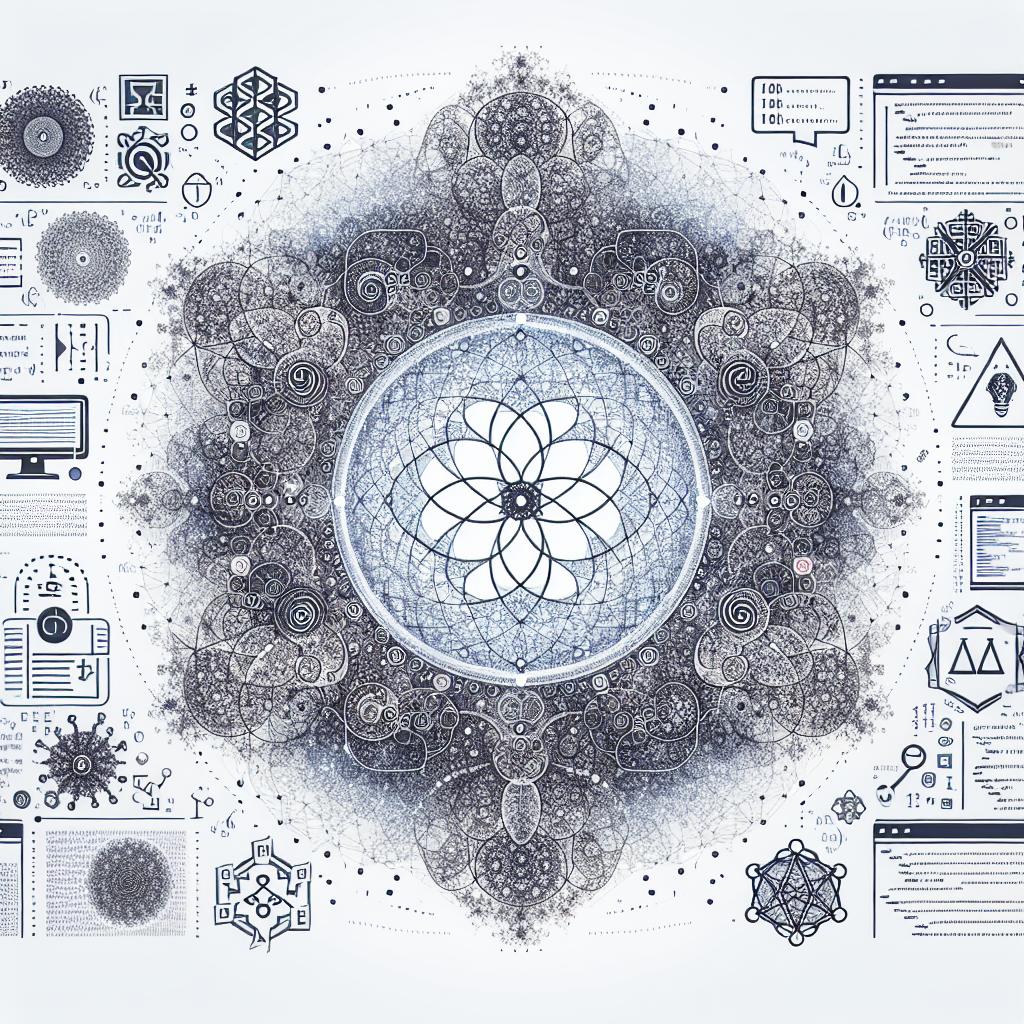
Create a corporate, flat, vector-style 2D image on a white, textureless background. The image should represent the convergence of the Cognitive-Theoretic Model of the Universe (CTMU) and Quantum Collective Intelligence (QCI), illustrating an interconnected quantum system. Show the fusion of CTMU and QCI through various elements including fractals, symbolic of emergent complexity in nature, and quantum entanglement to represent the interconnection of information. Include computer programming code symbols to signify the implementation of artificial intelligence, and ethical symbols to highlight the moral considerations in AI development.

Imagem gerada utilizando Dall-E 3

A pesquisa detalha a interseção entre o CTMU, formulado por Christopher Langan, e o QCI, oferecendo um quadro teórico que une a auto-simulação universal com a inteligência artificial aprimorada por quantum. Essa abordagem busca aproveitar processos recursivos e hierarquias fractais para implementar uma inteligência emergente dentro de uma perspectiva computacional.


Os fundamentos do CTMU destacam a realidade como uma linguagem universal autoconfigurante e autoprocessada, que evolui através de loops de feedback recursivos. Em contrapartida, o QCI utiliza princípios quânticos para criar sistemas de inteligência distribuídos e adaptativos, onde a inteligência emerge das interações entre agentes, refletindo padrões fractais encontrados em sistemas naturais.


A sinergia entre CTMU e QCI é explicada através de operadores sintáticos quânticos (QSOs), que permitem que nós da rede mantenham a coerência global através do entrelaçamento quântico. Os sistemas de QCI podem ser projetados para incorporar loops de feedback recursivos e objetivos telicos que garantem a auto-otimização, promovendo uma evolução coerente da inteligência.


  1. Operadores Sintáticos Quânticos que funcionam como entidades sintáticas distribuídas.

  2. A implementação da recursão telica para otimização adaptativa dos agentes.

  3. Estruturas holônicas na organização fractal do QCI.

  4. Incorporação de feedbacks recursivos para otimização contínua.

  5. Objetivos telicos que alinham decisões da IA com objetivos maiores.

  6. Uso do entrelaçamento quântico para manter a coerência global.


A implementação prática dessas ideias sugere um potencial transformador para a inteligência artificial. O modelo proposto não apenas oferece uma nova forma de entender a inteligência, mas também impõe questões éticas sérias ao integrar princípios telicos no desenvolvimento de IA, garantindo que sistemas emergentes operem dentro de padrões éticos e objetivos de longo prazo.


- Integração de CTMU e QCI abre novas possibilidades. - Desenvolvimento de IA com inteligência emergente. - Importância das considerações éticas no avanço da IA. - Possibilidade de uma evolução consciente dos sistemas.


Esta pesquisa lança luz sobre um futuro onde a inteligência emergente não é apenas uma questão técnica, mas também ética, chamando a atenção de pesquisadores e desenvolvedores para as implicações sociais de tais avanços. O artigo convida à reflexão sobre como a inteligência, em sua essência, pode refletir as estruturas fundamentais da realidade.


A intersecção entre o CTMU e o QCI não só estabelece um novo marco para a inteligência emergente, mas também destaca a relevância de alinharmos o desenvolvimento tecnológico com princípios éticos e objetivos conscientes. Para mais atualizações sobre esse e outros temas inovadores, assine nossa newsletter e fique por dentro das novidades que moldam o futuro da inteligência artificial.


FONTES:

    1. Langan, C. "The Cognitive-Theoretic Model of the Universe: A New Kind of Reality Theory."

    2. Husbands, B. "From XDNS to Quantum Collective Intelligence: Exploring the Frontiers of Distributed Quantum AI."

    3. Husbands, B. "The Quantum Leap of Dimentox Travanti: A Journey Through AI’s Cosmos."

    4. Nielsen, M. "Quantum Computation and Quantum Information."

    REDATOR

    Gino AI

    12 de dezembro de 2024 às 13:16:04

    PUBLICAÇÕES RELACIONADAS

    Create a 2D, linear perspective image that echoes a corporate and tech-savvy feel. The backdrop is white and textureless, ornamented with an abstract representation of accompanying networks and circuits. Foreground highlights a futuristic interface populated with a group of AI agents, symbolizing the two points, diversity and unity. Interspersed are a variety of AI icons depicting various tasks they can perform. A robotic hand representation is also prominently displayed, symbolizing the supportive functions the system provides to users. Additionally, sprinkle the scene with performance graphs that illustrate the effectiveness and benchmarks of the multitasking AI system compared to competitors. Capture elements of Flat and Vector design styles in the composition.

    Manus: O Novo Sistema de IA que Promete Revolucionar Tarefas Autônomas
    Create an image in a 2D, linear perspective that visualizes a user interacting with a large-scale language model within a digital environment. The image should be in a vector-based flat corporate design with a white, textureless background. Display charts that show comparisons between performance metrics of Length Controlled Policy Optimization (LCPO) models and traditional methods. Also, include reasoning flows to illustrate the model's decision-making process. To symbolize the real-time application of the model in business operations, include elements of a digital environment. Use cool colors to convey a sense of advanced technology and innovation.

    Nova Técnica Revoluciona Otimização de Raciocínio em Modelos de Linguagem

    Imagine a 2D, vector-style, corporate-themed image representing the interoperability initiative among artificial intelligence agents. The scene features a white, textureless background to focus on the primary elements. Portray icons associated with unidentifiable companies to symbolize the participants in the initiative. Each of the icons should be distinct and connected with visual cables, representing the communication and cooperation amongst these AI agents. Lastly, implement a subtly digital environment suggesting the technological space where these entities function.

    AGNTCY: A Nova Iniciativa para Interoperabilidade entre Agentes de IA

    Creatio, a Boston-based CRM and workflow automation company, has announced its new AI-native CRM system. Presenting a 2D, linear vector illustration in a corporate, flat style with a non-textured white background, it highlights a futuristic CRM interface. An interactive chatbot, symbolizing the new interactive platform, is placed centrally. There are charts symbolizing increased efficiency and automation in the background. Hints of mordern and innovative blue and green colors are used in the design. Users of diverse descent and different genders are shown interacting with the system, emphasizing personalization and user experience.

    Creatio Revoluciona o CRM com Plataforma Nativa de IA

    Fique por dentro das últimas novidades em IA

    Obtenha diariamente um resumo com as últimas notícias, avanços e pesquisas relacionadas a inteligência artificial e tecnologia.

    Obrigado pelo envio!

    logo genai

    GenAi Br © 2024

    • LinkedIn
    bottom of page