top of page

Gino News

quarta-feira, 29 de janeiro de 2025

Aprenda a Aperfeiçoar o Modelo Multimodal Llama-3.2 com Aceleradores da Intel

Tecnologia Inteligência Artificial Tutorial

Neste artigo, o autor apresenta um tutorial sobre como realizar o fine-tuning do modelo multimodal Llama-3.2 11B Vision Instruct da Meta, utilizando aceleradores Intel, focando na implementação em um ambiente Docker e utilizando Low-Rank Adaptation para eficiência no treinamento.
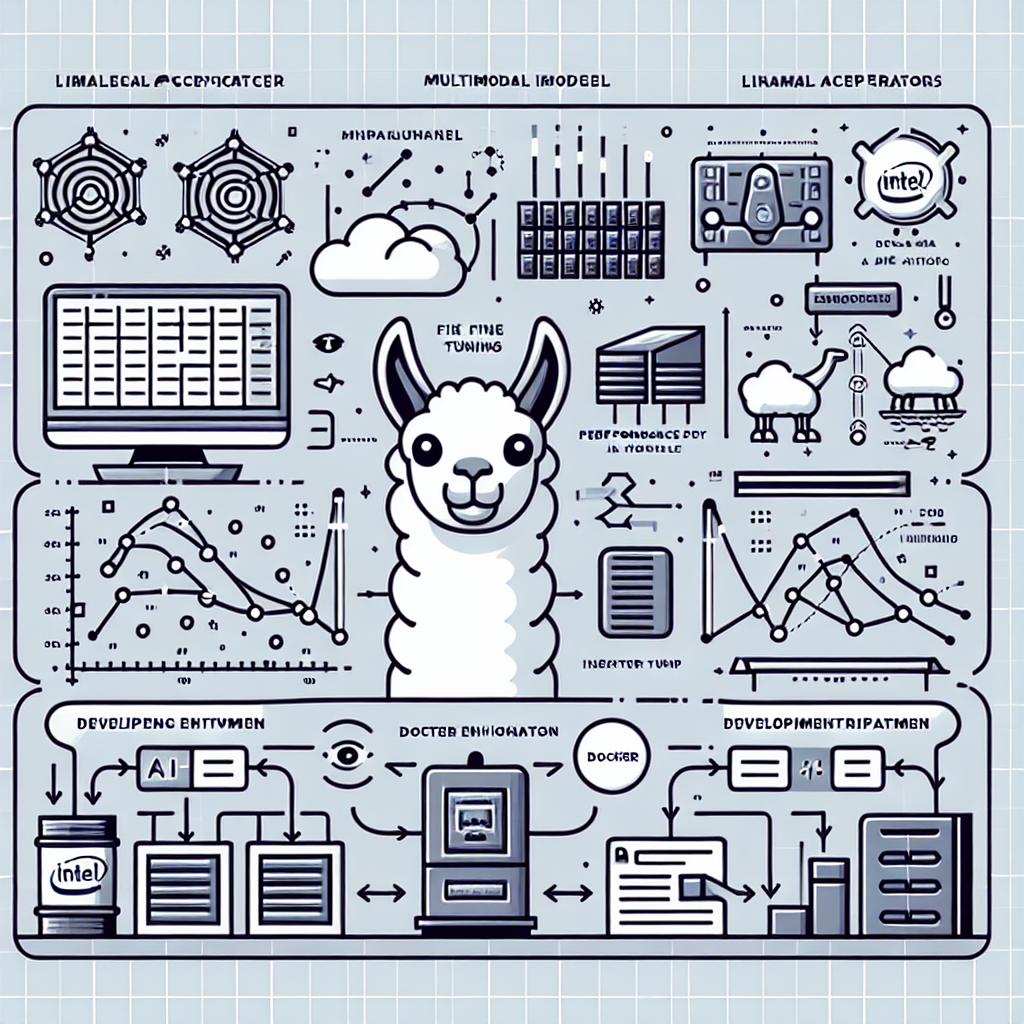
Create a 2D, linear perspective vector style image that conveys the concept of fine-tuning the multimodal model Llama-3.2. It should be corporate in tone and have a flat, textureless white background. In the foreground, emphasize Intel accelerators, a Docker environment, and data flow between image and text. Include representations of the model's performance before and after fine-tuning as graphs, images of the development environment to highlight Docker setup, AI icons to signify the use of artificial intelligence, logos that do not directly reveal but are suggestive of Intel and an AI organization, and a flowchart illustrating the fine-tuning process and its steps.

Imagem gerada utilizando Dall-E 3

Os Multimodal Large Language Models (MLLMs) são extensões dos Large Language Models (LLMs) que incorporam diferentes mídias, como imagens, áudio e vídeo, além de texto. O artigo se concentra em uma subcategoria chamada Visual Language Models (VLMs), que geram saídas de texto a partir de entradas de imagem e texto. O modelo Llama-3.2 11B Vision Instruct foi desenvolvido para responder perguntas sobre imagens, o que o torna uma escolha ideal para demonstrar o fine-tuning apresentado.


Para utilizar os modelos da Meta Llama, é necessário solicitar acesso no Hugging Face e configurar o ambiente Docker com as dependências necessárias. O autor fornece um Dockerfile detalhado para facilitar a replicação do ambiente, e destaca a importância de configurar corretamente os aceleradores Intel Gaudi 2 para otimizar o treinamento.


  1. Definição de MLLMs e VLMs.

  2. Processo de solicitação de acesso aos modelos Llama no Hugging Face.

  3. Configuração do ambiente Docker.

  4. Utilização do dataset de pares imagem-caption para o fine-tuning.

  5. Implementação da técnica Low-Rank Adaptation (LoRA) para eficiência no treinamento.

  6. Resultados do fine-tuning e comparação entre o modelo original e o fine-tunado.


Após o fine-tuning, o autor descreve a execução de testes com o modelo ajustado, usando um conjunto de dados de teste. A análise dos resultados demonstra que o modelo fine-tunado apresenta respostas mais diretas, conforme os dados de treinamento, embora ambos os modelos tenham se saído bem. Esse processo destaca a capacidade de adaptação dos modelos multimodais para tarefas específicas.


Este artigo fornece uma visão abrangente sobre o fine-tuning de modelos multimodais como o Llama-3.2, utilizando ferramentas como Docker e aceleração com Intel. O leitor é incentivado a explorar a configuração e testes de modelos semelhantes, além de acompanhar novidades e tutoriais que serão disponibilizados regularmente em nossa newsletter. Mantenha-se atualizado com conteúdos relevantes sobre inteligência artificial e técnicas de machine learning.


FONTES:

    1. Meta Llama Models

    2. Hugging Face Datasets

    3. Docker Documentation

    4. Intel AI Development Resources

    5. Optimum for Intel

    REDATOR

    Gino AI

    29 de janeiro de 2025 às 23:50:09

    PUBLICAÇÕES RELACIONADAS

    Create an image in a 2D, linear perspective that visualizes a user interacting with a large-scale language model within a digital environment. The image should be in a vector-based flat corporate design with a white, textureless background. Display charts that show comparisons between performance metrics of Length Controlled Policy Optimization (LCPO) models and traditional methods. Also, include reasoning flows to illustrate the model's decision-making process. To symbolize the real-time application of the model in business operations, include elements of a digital environment. Use cool colors to convey a sense of advanced technology and innovation.

    Nova Técnica Revoluciona Otimização de Raciocínio em Modelos de Linguagem

    Create a 2D, flat corporate-style vector image on a white, texture-less background. The image should feature elements symbolising cybersecurity, including padlocks to symbolise security, and alert icons to represent risks. There should also be a technological background that reflects the AI environment, highlighting the importance of security in artificial intelligence.

    Segurança em LLM: Riscos e Melhores Práticas para Proteger a Inteligência Artificial

    Create a 2D, linear image with a flat, corporate, vector-inspired style set against a white, untextured background. The image displays a dynamic chart that depicts the explosive growth of AI tools and the associated market implications. Rising startups are shown next to declining traditional platforms. Key elements include a growth graph that visualizes the thriving numbers of AI tools, software tool icons to symbolize innovation and technology, and upward-pointing arrows that symbolize growth and progress. The image is awash with bright, vibrant colors to convey the energy and transformation in the sector. Finally, include silhouettes of freelance workers of varying descents--Hispanic, Caucasian, Middle Eastern, South Asian, and Black--to illustrate the impact on the job market.

    Startup de IA registra crescimento de 8.658%, enquanto OpenAI avançou apenas 9%
    Imagine a 2D, vector-based scene in flat, corporate style. The background has a clean, texture-free white color, emphasizing the main elements of the image. In the center, we see detailed line graphs, bar graphs, and pie charts representing the shifting market shares between various AI companies in 2025. DALL-E's graph clearly displays a significant 80% decline, while Black Forest Labs stands out with some impressive, upward-trending performance charts, symbolizing its emergence as a leader in image generation. Bright and contrasting colors are used to differentiate the competition in the AI sector. Additional elements include abstract symbols of innovation, such as gears, light bulbs, and microchips, subtly scattered in the background to highlight the rapid evolution of AI tools.

    Mudanças Drásticas no Mercado de IA: DALL-E Enfrenta Queda e Black Forest Labs Surge em 2025

    Fique por dentro das últimas novidades em IA

    Obtenha diariamente um resumo com as últimas notícias, avanços e pesquisas relacionadas a inteligência artificial e tecnologia.

    Obrigado pelo envio!

    logo genai

    GenAi Br © 2024

    • LinkedIn
    bottom of page