
top of page

Gino News

sexta-feira, 28 de fevereiro de 2025

Cérebro Humano Transformado em Vidro pela Erupção do Vesúvio

Arqueologia Ciência História

Um conjunto de fragmentos do cérebro de um homem morto pela erupção do Monte Vesúvio em 79 d.C. foi encontrado em Herculano, revelando uma preservação única em estado vítreo, com neurônios ainda visíveis, devido a altas temperaturas seguidas de resfriamento rápido.
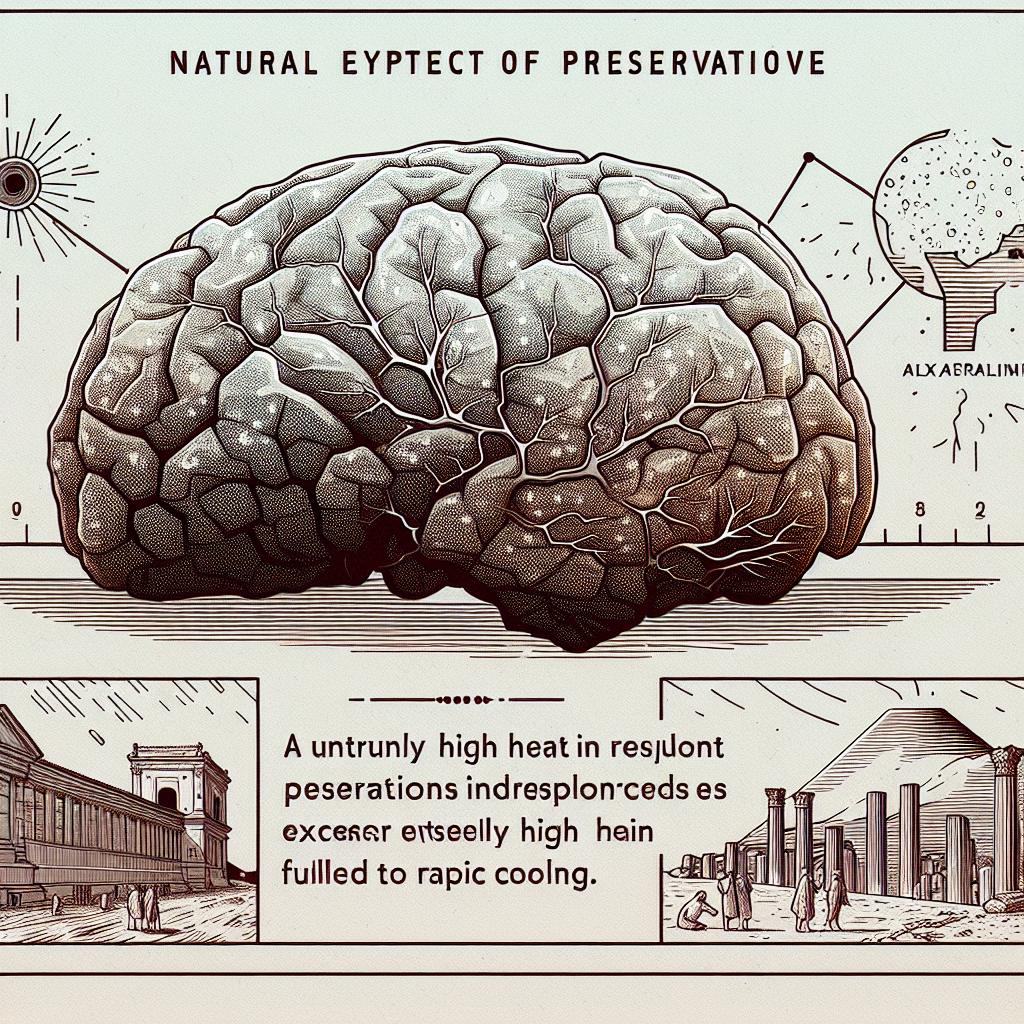
Generate a 2D, flat, vector-style illustration, with the linear perspective set on a white, untextured background. The illustration should focus on fragments of a preserved brain depicting a glass-like state with neurons still visible. This represents a unique instance of natural preservation in response to extremely high heat followed by rapid cooling, as experienced by a man during the eruption of Mount Vesuvius in 79 AD. The brain stands as the central element of the image, highlighting the theme of the interplay between science and archaeology. To symbolize the circumstances of the eruption, incorporate graphical elements of fire and ashes in the depiction. Include an archeological backdrop to provide context to the discovery.

Imagem gerada utilizando Dall-E 3

A descoberta de fragmentos do cérebro de uma vítima da erupção do Monte Vesúvio, que ocorreram em 79 d.C., na cidade romana de Herculano, impressiona pela sua preservação e pela transformação do tecido cerebral em uma substância semelhante ao vidro. Cientistas analisaram as condições sob as quais isso ocorreu, revelando que o cérebro foi submetido a temperaturas superiores a 500 °C antes de um resfriamento rápido, que preservou pequenos detalhes celulares.


Durante escavações, o arqueólogo Pier Paolo Petrone identificou os fragmentos de cérebro brilhantes enquanto documentava os restos carbonizados de um jovem encontrado em um local de culto. A análise revelou que esses fragmentos apresentavam uma aparência semelhante à obsidiana, mas com características distintas, tornando-os frágeis. A investigação das composições químicas e a realização de experimentos para testar as condições térmicas forneceu informações sobre a transição do material que resultou no seu estado vítreo.


Além da transformação do cérebro em vidro, a singularidade deste caso se destaca entre as descobertas arqueológicas em Herculano, onde muitos outros restos humanos foram encontrados carbonizados. A preservação do cérebro pode estar ligada ao fato de o jovem estar abrigado dentro do edifício no momento da erupção. No entanto, as razões para tal preservação continuam incertas.


  1. Descoberta de fragmentos de cérebro humano preservados em Herculano.

  2. Transformação do cérebro em material vítreo devido a altas temperaturas.

  3. Possibilidade de preservação de neurônios visíveis nos fragmentos.

  4. Experimentos para compreender a transição do material vítreo.

  5. Unicidade do caso em relação a outros achados arqueológicos.


Com o avanço das pesquisas, os cientistas pretendem continuar analisando os fragmentos vitrais para entender melhor sua composição e os fatores que contribuíram para sua preservação. A intrigante descoberta abre portas para novas investigações sobre a vida e morte em tempos antigos, além de desafiar a compreensão sobre os limites de preservação em condições extremas.


- O estudo mostra a influência das condições extremas de erupções vulcânicas. - A descoberta pode ajudar na compreensão médica e forense do tecido cerebral. - O caso é um exemplo de preservação única na arqueologia. - A pesquisa continua a revelar segredos sobre a vida em Herculano.


A pesquisa sobre este caso oferece insights valiosos sobre os efeitos das erupções vulcânicas na preservação de restos humanos. Este achado único é um lembrete da importância da arqueologia na construção de narrativas sobre o passado. Os leitores são estimulados a acompanhar as notícias, inscrevendo-se na nossa newsletter para receber atualizações sobre descobertas fascinantes e pesquisas inovadoras.


A descoberta de fragmentos de cérebro transformados em vidro pela erupção do Vesúvio não apenas enriquece o entendimento sobre os efeitos das erupções em restos mortais, mas também levanta questões sobre as condições extremas que podem levar a preservações surpreendentes. Para saber mais sobre arqueologia e ciência, inscreva-se em nossa newsletter e fique por dentro das novidades intrigantes que trazemos diariamente.


FONTES:

    1. MIT Technology Review

    2. Scientific Reports

    3. New England Journal of Medicine

    4. PLOS ONE

    5. Live Science

    REDATOR

    Gino AI

    28 de fevereiro de 2025 às 10:13:51

    PUBLICAÇÕES RELACIONADAS
    Create a 2D, vector-style artwork set in a clinical setting. On a white, textureless background, illustrate the scene with a flat and corporate aesthetic. A healthcare professional is preparing to administer an injection of lenacapavir to a diverse group of patients. The syringe is a visual symbol of the innovative treatment. The patients, representing a broad range of genders and descents such as Middle-Eastern female, Hispanic male, and South Asian transgender person, convey hope and are the beneficiaries of this advancement. The environment, symbolizing the seriousness of the treatment, is a doctor's office furnished with charts and graphs indicating the reduction in HIV infections due to the new treatment. Use a colour palette consisting of shades of blue and green to transmit trust and hope.

    Lenacapavir: Injeção Anual Promissora para Prevenção do HIV

    Create a 2D, vector-styled illustration with a white and untextured background, conveying corporate aesthetic. Depict the intersection of technology and entertainment, featuring elements of gaming and artificial intelligence. Incorporate graphic elements representing the evolution of games in the digital era, and artificial intelligence icons to symbolize technological integration in game development. Use bright, vibrant colors to convey emotion and innovation in the gaming industry. This image should not contain any identifiable figures or characters and should maintain a flat, linear perspective.

    Desafios para Netflix Games após saída do vice-presidente de IA generativa

    Create an image that reflects the future of artificial intelligence in healthcare. The scene should be set in a futuristic hospital environment, where healthcare professionals of diverse descents and genders are analyzing real-time data through innovative technological devices. In the backdrop, a panel displaying floating graphs and data should be visible, symbolizing the integration of AI in medical practice. The image should be from a 2D linear perspective, styled as a vector image with flat, corporate aesthetics. The background of the image should be white and textureless. Key elements include digital graphs and data - symbolizing health data analysis, healthcare professionals - representing the application of technology in medicine, and a futuristic hospital setting - indicating the forefront of health innovations.

    Mayo Clinic Inova com Reverse RAG para Combater Alucinações em AI na Saúde

    Illustrate a heated debate between two male AI specialists, one represented in an academic setting and the other in a high-tech lab. The first individual, a studious man in the academic setting, expresses a skeptical viewpoint, surrounded by books and research papers. The second, depicted in a technology-dense lab environment, conveys an optimistic vision about the AI future. They are having an intense discussion against a dynamic backdrop reflecting innovation and debate with AI growth charts, and advanced technology like robots and computers in the background. The style is flat, corporate vector graphics on a white, textureless background. The perspective is 2D and linear.

    O Debate Entre Thomas Wolf e Dario Amodei: Futuro da IA em Jogo

    Fique por dentro das últimas novidades em IA

    Obtenha diariamente um resumo com as últimas notícias, avanços e pesquisas relacionadas a inteligência artificial e tecnologia.

    Obrigado pelo envio!

    logo genai

    GenAi Br © 2024

    • LinkedIn
    bottom of page