
top of page

Gino News

sexta-feira, 24 de janeiro de 2025

Desvendando o Reconhecimento de Fala em Python: Soluções de 2025

Tecnologia Desenvolvimento Python

Em 2025, o reconhecimento de fala em Python apresenta uma variedade de soluções, abrangendo desde bibliotecas open-source até serviços em nuvem, permitindo aos desenvolvedores escolherem a opção que melhor se adapta às suas necessidades, com ênfase em fatores como custo, precisão e facilidade de implementação.
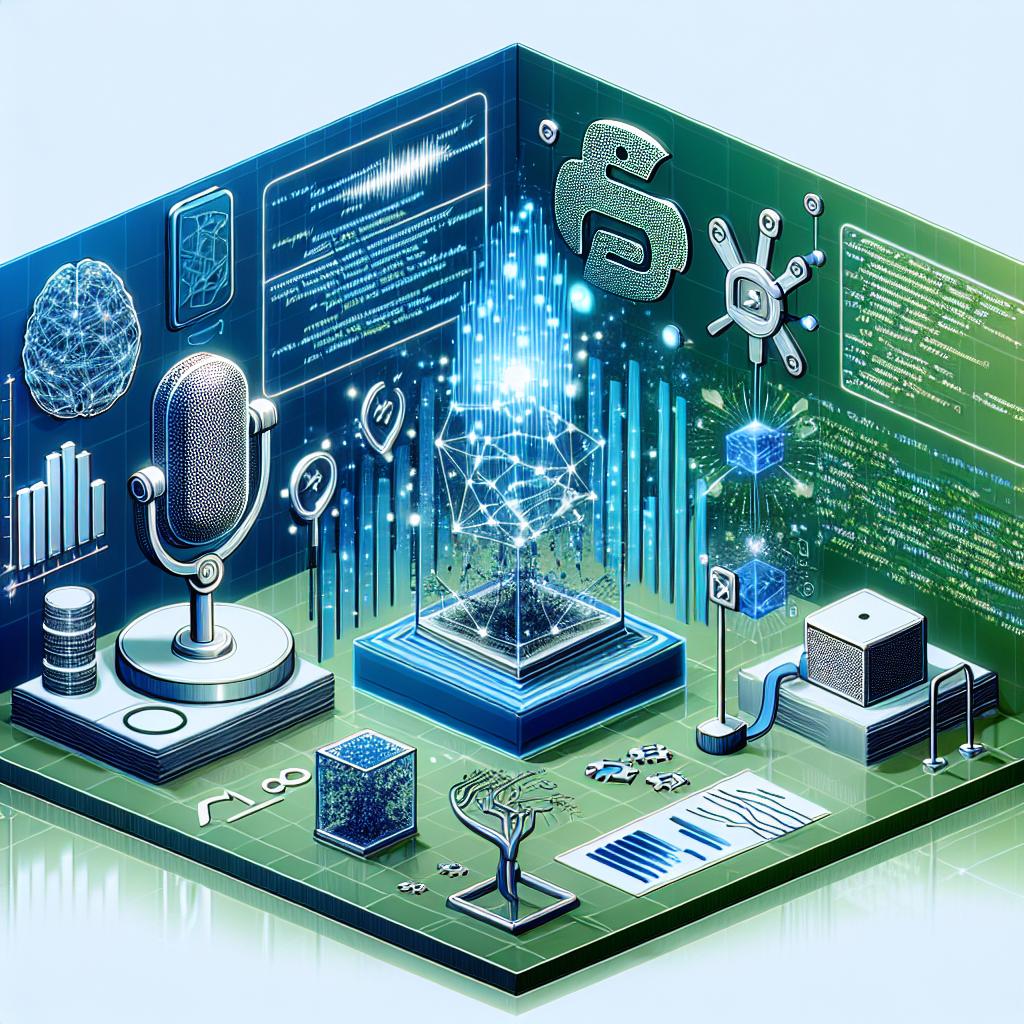
In a futuristic year of 2025, Python Speech Recognition displays a plethora of solutions, ranging from open-source libraries to cloud services, enabling developers to select the option that best suits their needs, focusing on factors like cost-effectiveness, accuracy, and implementation ease. The 2D, linear perspective image should portray a future-oriented environment with illustrations of code and neural networks, symbolizing the maturation of speech recognition technology. Elements like stylized microphones, signifying devices that utilise speech recognition, and data charts, illustrating the analysis and effectiveness of recognition, accompanied by sound waves can be added to emphasize the theme. The style is corporate, vector, and flat, with gradient shades of blue and green suggesting innovation and technology, all over a white, untextured background. Additional coding symbols reflect the technical foundation of the solutions, and a digital background hints at a modern technological ambience.

Imagem gerada utilizando Dall-E 3

O reconhecimento de fala tem se tornado uma tecnologia essencial na interação entre humanos e máquinas, com aplicações em assistentes virtuais, ferramentas de transcrição e dispositivos controlados por voz. Este artigo explora as diversas opções disponíveis em Python, destacando bibliotecas open-source e serviços cloud, e como desenvolvedores podem escolher a solução mais adequada para seus projetos.


As soluções de reconhecimento de fala em Python são geralmente divididas em duas categorias: bibliotecas open-source e serviços baseados em nuvem. As bibliotecas, como Whisper e DeepSpeech, oferecem controle e customização através do código-fonte aberta, enquanto os serviços de nuvem, como o AssemblyAI, fornecem infraestrutura robusta e facilidade de acesso via API. O balanço entre custo, precisão e controle é crucial ao escolher entre essas opções.


Fatores importantes a serem considerados na escolha entre soluções open-source e cloud incluem:


  1. Precisão: Soluções em nuvem geralmente oferecem maior precisão.

  2. Custo: Ferramentas open-source podem ser econômicas, mas exigem recursos computacionais.

  3. Facilidade de implementação: Soluções em nuvem tendem a ser mais simples de integrar.

  4. Controle: Open-source oferece total controle sobre o código.

  5. Transparência: Acesso total ao funcionamento interno da solução.


O artigo também menciona quatro bibliotecas open-source clássicas no reconhecimento de fala em Python. O Whisper se destaca por sua precisão, enquanto o DeepSpeech é recomendado para desenvolvedores avançados que buscam personalização em ambientes offline. O wav2letter apresenta uma arquitetura única, embora exija habilidades técnicas significativas para instalação e uso. O SpeechRecognition, por sua vez, facilita o acesso a múltiplos recursos, mas não é uma solução independente.


- Whisper: Flexível e preciso, ideal para ambientes desafiadores. - DeepSpeech: Ótima opção para processamento offline. - Wav2letter: Arquitetura inovadora, mas instalação complexa. - SpeechRecognition: Wrapper útil, mas limitações em funcionalidades. - AssemblyAI: API poderosa e fácil de usar para reconhecimento em nuvem.


As considerações finais envolvem a adaptação das soluções de reconhecimento de fala de acordo com a necessidade do projeto. Para implementar de forma eficaz, deve-se ponderar o cenário de uso, definitivas sobre custo e controle, e as especificidades de cada ferramenta ou API escolhidas.


Em suma, o reconhecimento de fala em Python em 2025 reflete um ecossistema rico e variado. Desenvolvedores têm acesso a uma gama de ferramentas que vão desde soluções open-source robustas até APIs em nuvem avançadas. A escolha correta pode impactar significativamente a eficiência e a eficácia de projetos de tecnologia de fala, convidando os interessados a explorarem essas opções e a se inscreverem na nossa newsletter para mais atualizações e conteúdos sobre inovação tecnológica.


FONTES:

    1. AssemblyAI Blog

    2. Whisper GitHub

    3. DeepSpeech GitHub

    4. SpeechRecognition GitHub

    5. Wav2letter GitHub

    6. AssemblyAI API

    REDATOR

    Gino AI

    24 de janeiro de 2025 às 13:28:25

    PUBLICAÇÕES RELACIONADAS

    Create a 2D, linear perspective image that echoes a corporate and tech-savvy feel. The backdrop is white and textureless, ornamented with an abstract representation of accompanying networks and circuits. Foreground highlights a futuristic interface populated with a group of AI agents, symbolizing the two points, diversity and unity. Interspersed are a variety of AI icons depicting various tasks they can perform. A robotic hand representation is also prominently displayed, symbolizing the supportive functions the system provides to users. Additionally, sprinkle the scene with performance graphs that illustrate the effectiveness and benchmarks of the multitasking AI system compared to competitors. Capture elements of Flat and Vector design styles in the composition.

    Manus: O Novo Sistema de IA que Promete Revolucionar Tarefas Autônomas
    Create an image in a 2D, linear perspective that visualizes a user interacting with a large-scale language model within a digital environment. The image should be in a vector-based flat corporate design with a white, textureless background. Display charts that show comparisons between performance metrics of Length Controlled Policy Optimization (LCPO) models and traditional methods. Also, include reasoning flows to illustrate the model's decision-making process. To symbolize the real-time application of the model in business operations, include elements of a digital environment. Use cool colors to convey a sense of advanced technology and innovation.

    Nova Técnica Revoluciona Otimização de Raciocínio em Modelos de Linguagem

    Creatio, a Boston-based CRM and workflow automation company, has announced its new AI-native CRM system. Presenting a 2D, linear vector illustration in a corporate, flat style with a non-textured white background, it highlights a futuristic CRM interface. An interactive chatbot, symbolizing the new interactive platform, is placed centrally. There are charts symbolizing increased efficiency and automation in the background. Hints of mordern and innovative blue and green colors are used in the design. Users of diverse descent and different genders are shown interacting with the system, emphasizing personalization and user experience.

    Creatio Revoluciona o CRM com Plataforma Nativa de IA
    Create a detailed 2D, linear and vectorial image in a flat, corporate style on a white non-textured background. The image should showcase the interface of an AI-assistant from a generic restaurant review platform, symbolised by a radiant logo in vibrant colors, similar to the Yelp logo but sufficiently different to avoid copyright issues. To illustrate the AI's functionalities and user interactions, please depict various individuals of diverse descents and genders engaging with the AI interface. Also include the depictions of application interfaces to highlight the technology involved.

    Yelp Inova com Assistente de IA: Desafios e Avanços na Plataforma

    Fique por dentro das últimas novidades em IA

    Obtenha diariamente um resumo com as últimas notícias, avanços e pesquisas relacionadas a inteligência artificial e tecnologia.

    Obrigado pelo envio!

    logo genai

    GenAi Br © 2024

    • LinkedIn
    bottom of page